
Understanding Aspergillus in Cannabis
Why four Aspergillus species are the highest-stakes microbial analyte in New York cannabis testing: where the mold comes from, why it's a genuine health risk, and what cultivators can do about it.
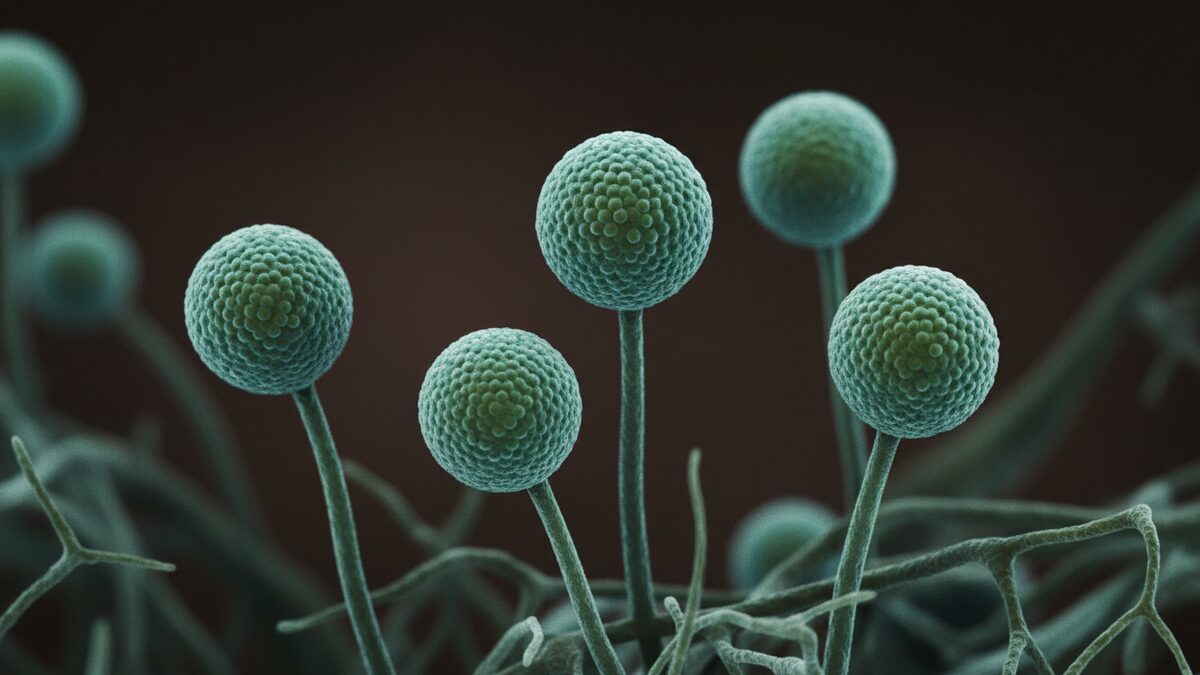
Of everything on New York's cannabis testing panel, Aspergillus carries the highest stakes: it's a zero-tolerance analyte, it's genuinely dangerous to some consumers, and it's everywhere cannabis is grown. Understanding it is the difference between treating testing as a lottery and treating it as a controllable risk.
What it is
Aspergillus is a genus of common molds found in soil, air, and decaying plant matter worldwide. Its spores are microscopic, airborne, and effectively impossible to exclude from a growing environment — indoor, greenhouse, or outdoor. New York requires four species to be absent from tested cannabis:
- Aspergillus fumigatus
- Aspergillus flavus
- Aspergillus niger
- Aspergillus terreus
These four are singled out because they're the species most associated with human disease — and because A. flavus in particular can produce aflatoxins, among the most potent naturally occurring toxins known.
Why regulators care: aspergillosis
Inhaled Aspergillus spores can cause invasive aspergillosis, a serious and sometimes fatal infection, primarily in people with weakened immune systems — chemotherapy patients, transplant recipients, people with HIV, and others. Medical case reports have linked aspergillosis in immunocompromised patients to contaminated cannabis, which lands differently for this crop than for most agricultural products: cannabis is legally sold to medical patients, some of whom are exactly the immunocompromised population at risk, and smoking or vaping delivers spores directly into the lungs.
That's why the requirement is absence rather than a threshold. There's no agreed safe inhaled dose of A. fumigatus for an immunocompromised patient.
Why cannabis keeps failing for it
Aspergillus is a hard adversary for cultivators for several reasons:
- It's ambient. Spores arrive on air currents, workers, equipment, and irrigation water. Zero exposure isn't achievable in agriculture.
- Cannabis is a welcoming host. Dense, resinous flower traps spores; the humidity swings of late flower, harvest, drying, and curing offer repeated windows for germination.
- It hides. Contamination inside a dense bud is invisible at any practical inspection level — flower can look and smell perfect and still test positive.
- A single detection fails the lot. With presence/absence testing, one viable spore in the sample is enough.
Outdoor and greenhouse grows face elevated exposure, but indoor grows fail Aspergillus tests too — HVAC systems, soil media, and people all carry spores.
Prevention first
Remediation is not a substitute for good cultivation and post-harvest practice. The load-reduction fundamentals:
- tight humidity control through late flower, drying, and curing;
- airflow and filtration appropriate to the space;
- sanitation regimes for tools, surfaces, and hands at harvest and trim;
- moisture management in packaging (water activity discipline);
- clean, climate-controlled storage.
But prevention reduces probability — it can't take it to zero, because the organism is ambient and the standard is absence. That residual risk is what treatment addresses.
Where treatment fits
Because Aspergillus contamination lives inside flower as well as on it, surface-only treatments (UV, gas contact) can leave viable organisms behind precisely where a compliance sample might find them. Penetrating treatment — X-ray — reaches the full volume of the product and breaks the organism's DNA so it cannot replicate or form colonies on a test plate. Peer-reviewed research on X-ray cannabis treatment specifically demonstrated Aspergillus rendered non-viable without significant changes to cannabinoids or terpenes.
New York operators use that treatment two ways: proactively, reducing microbial load before compliance sampling; or after a failure, through the state's one-shot remediation pathway (how that process works).
One honest limitation, always: if mold has been present long enough to produce mycotoxins, killing the organism doesn't remove the toxins — and mycotoxins are tested separately. Talk to your lab about lots with visible or long-standing mold issues.
Talk it through
If Aspergillus is your current problem — a failed COA in hand — or your recurring worry, RAD-C can walk you through how X-ray treatment applies to your product, packaging, and volumes: 315-217-1102 or request a quote.
Sources: NY OCM Laboratory Testing Limits · Peer-reviewed X-ray cannabis decontamination study (PMC9665375) · CDC/medical literature on invasive aspergillosis in immunocompromised patients
About this guide: published by RAD-C for general information. Regulatory details are summarized from the sources linked above, reflect our understanding as of the update date shown, and can change — always verify current requirements with the NY Office of Cannabis Management and your compliance counsel. Nothing here is legal advice.